

7 Smartwatches & Wearables in Oman That Could Change How You Live Day-to-Day

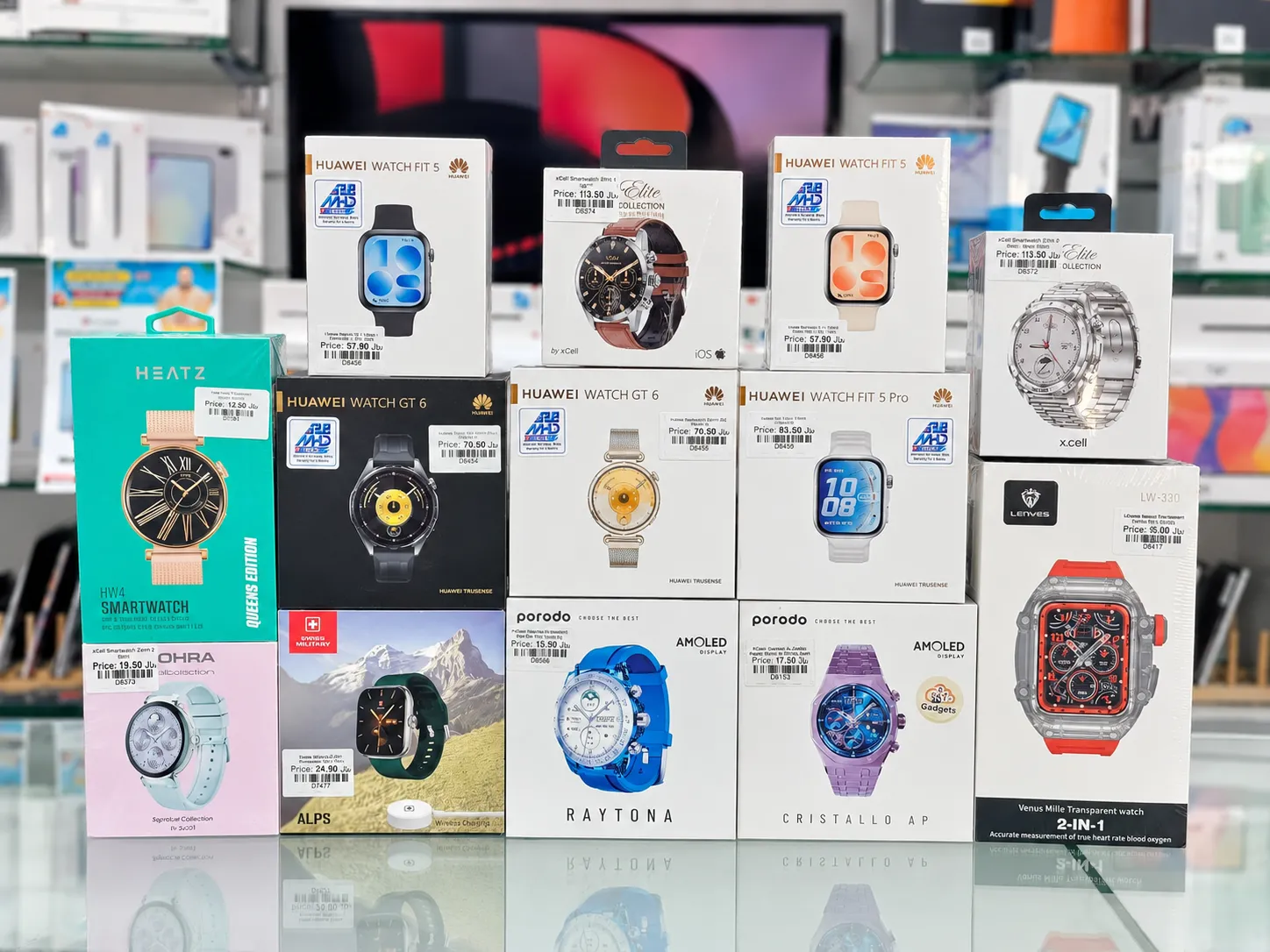
There’s a moment that happens to almost every person owning smartwatches & wearables in Oman. It’s usually a few days in, and it’s small. A call comes through while you’re carrying groceries from the car, and instead of digging through your bag, you just lift your wrist and answer. Or you glance down mid-walk and notice your heart rate’s been creeping up all morning, and you realise, with a slightly uncomfortable jolt, that you’ve been more stressed than you thought. That’s the moment a smartwatch stops being a gadget and starts being something you actually rely on.
This isn’t a hardware spec sheet dressed up as a buying guide. It’s an honest look at why smartwatches and wearables in Oman have quietly become one of the most genuinely life-improving categories of tech available today, and how to choose one that actually fits the life you’re living rather than the life a marketing photo is selling you.
Why Are Smartwatches and Wearables Suddenly Everywhere in Oman?
Walk through any mall in Muscat and you’ll notice it. Wrists everywhere, lit up with notifications, fitness rings closing, calls being answered without a phone in sight. This isn’t a passing trend. It’s a genuine shift in how people want to interact with technology — less staring at a screen, more glancing and moving on with your day.
Three things are driving this. People are tired of pulling out their phones 50 times a day just to check a message. People are more curious than ever about their own bodies, thanks to a growing culture of fitness and wellness awareness across Oman. And honestly, the price has finally caught up with the appeal — a genuinely capable smartwatch in Oman now starts at around 12.50 OMR, which makes trying one out almost risk-free.
What a Smartwatch Actually Does for Your Daily Life
It’s easy to dismiss a smartwatch as a phone notification mirror on your wrist, but that undersells what’s actually happening when you wear one properly.
Bluetooth Calling — Freedom From Constantly Reaching for Your Phone
There’s something quietly liberating about answering a call from your wrist while you’re driving through Muscat traffic, walking the dog, or elbow-deep in cooking dinner. Bluetooth calling, now standard on nearly every smartwatch in this category, means your phone can stay in your bag or on the kitchen counter, and you’re still reachable. It sounds like a small thing until you’ve lived with it for a week, and then going back to digging your phone out of a pocket feels almost primitive. Bluetooth calling works best when it’s paired with a phone that handles calls reliably in the first place; our mobile phones in Oman guide covers what to look for if you’re upgrading both at once
Health Monitoring — A Window Into How Your Body Is Actually Doing
This is the feature that genuinely surprises people. Continuous heart rate tracking, blood oxygen readings, sleep quality breakdowns, step counts that quietly add up over a week — none of this replaces a doctor, but all of it gives you a kind of awareness a regular watch simply cannot offer. Plenty of people in Oman have started a smartwatch habit purely for fitness and ended up using it just as much to notice when stress, poor sleep, or illness is creeping in before they’d have otherwise caught it.
Notification Management — Getting Some of Your Attention Back
Phones are designed to pull your attention constantly, and most of us know it. A smartwatch flips that relationship slightly. You see what’s come in with a glance, decide in half a second whether it actually matters, and put your wrist back down. Over time, that small habit genuinely reduces how often you reach for your phone out of pure reflex rather than real need — and reclaiming even a little of that attention back is worth more than most people expect going in.
How to Choose the Right Smartwatch in Oman for the Way You Actually Live
Display — AMOLED or Standard, and Why It Matters More Than You’d Think
An AMOLED display delivers deeper blacks, richer colour, and far better visibility outdoors under Oman’s bright sun than a standard IPS screen ever will. If you’ll be checking your watch outside, on the move, in daylight, this is worth prioritising over almost any other spec. Watches like the G-Tab FT8 Pro and the Aoka AW-B006 bring AMOLED quality into a genuinely affordable bracket, so this isn’t a feature reserved only for premium buyers anymore.
Battery Life — Matching It to How You’ll Actually Wear It
Most smartwatches in Oman comfortably run five to seven days between charges, though always-on displays and active GPS tracking will pull that down. If you’re the type who forgets to plug things in overnight, lean toward a model rated closer to seven days or more, so a missed charge doesn’t leave you stranded without your watch the next morning.
Water Resistance — For Everyone Who Forgets to Take It Off
IP67 and IP68 ratings mean your watch can survive rain, sink splashes, and a forgetful moment in the shower. If you swim, exercise outdoors, or simply have a habit of leaving your watch on through everything life throws at you, IP68 is the rating worth holding out for.
Strap Options — Letting the Watch Match Your Life, Not Just Your Outfit
Several models in this category, including the Haino Teko G12 Max and the GP-10 combo, come bundled with multiple straps right out of the box. This matters more than it sounds — a sleek metal strap for the office, a sport band for the gym, swapped in seconds, means one watch genuinely covers every part of your day rather than feeling like the wrong accessory half the time.
Smartwatches and Wearables in Oman — By Use Case
Everyday Lifestyle Wearers
If your priority is looking good, staying reachable, and getting gentle health insights without obsessing over data, an AMOLED smartwatch with Bluetooth calling and notification support from HainoTeko, Porodo or Modio covers everything you’ll genuinely use day to day.
Fitness and Health-Focused Wearers
For anyone serious about tracking workouts, recovery, and long-term health trends, prioritise heart rate accuracy, SpO2 monitoring, and sleep tracking. Xiaomi, Heatz and Riversong consistently deliver on this front, and pairing the watch with a companion fitness app turns raw numbers into something genuinely useful over weeks and months. Most fitness-focused wearers also pair their watch with a decent set of wireless earbuds in Oman, since workout tracking and workout audio tend to get bought together as a single fitness-tech upgrade
Sports and Outdoor Enthusiasts
If your days involve running, hiking, or anything that takes you outdoors across Oman’s varied terrain, IP68 waterproofing and reliable battery life under active GPS use matter more than display flourishes. Pawa, X.Cell and Powerology models are built with this kind of daily punishment in mind.
Style-Conscious Buyers
For people who want a watch that feels like jewellery as much as it feels like technology, brands like Swiss Military and NYork lean into premium design and finish, often with multiple strap and case colour options that let the watch genuinely become part of an outfit rather than sitting awkwardly against it.
First-Time Smartwatch Buyers
If you’ve never owned one and aren’t sure you’ll stick with it, there’s no shame in starting at the budget end. G-Tab and Smart Barry models, often priced from around 12.50 OMR, give you the full core experience- calling, notifications, basic health tracking- without a big financial commitment. Plenty of people who started here ended up loving the habit enough to upgrade later, and that’s a perfectly sensible way in.
Smartwatch or Fitness Band — Which One Actually Suits You?
| Factor | Smartwatch | Fitness Band |
|---|---|---|
| Display | Larger, often AMOLED | Smaller, simpler |
| Calling | Usually included | Rarely included |
| Health tracking | Comprehensive | Often basic |
| Style versatility | High | Lower |
| Battery life | 5–7 days typical | Often longer |
| Best for | All-round daily use | Pure fitness tracking |
The honest take: if you want one device that handles calls, notifications, health, and looks good doing it, a smartwatch wins almost every time. A fitness band still has its place for people who want the absolute longest battery life and the smallest, least obtrusive design on their wrist, but for most people in Oman today, a smartwatch simply does more of what they actually need.
A Few Honest Mistakes People Make When Buying Their First Smartwatch
The most common one is buying based purely on screen size, without checking whether the watch actually fits the wrist comfortably for daily wear; a watch that feels heavy or oversized within the first week tends to end up in a drawer. The second is ignoring battery life entirely and being disappointed two days in when it needs charging again. The third, and probably the most avoidable, is not checking whether the watch genuinely supports both Android and iOS properly, since some budget models have limited compatibility with one or the other for certain features like full notification mirroring.
Smartwatches and Wearables in Oman — What’s Actually Happening on the Ground
Across Muscat, the smartwatch shelves at electronics shops have quietly become some of the busiest in the store, particularly around Al Khuwair and Al Khoud Souq, where browsing several brands side by side before deciding is genuinely easy to do in one afternoon. HainoTeko has become something of a local favourite specifically because it manages to bring AMOLED displays, NFC support and wireless charging down into a price range that doesn’t feel like a luxury purchase, and that combination has built real loyalty among repeat buyers.
According to global wearable market research from IDC’s worldwide wearables tracker, the broader smartwatch and wearables category has continued growing year over year worldwide, driven largely by exactly the features Omani buyers are gravitating toward locally: health monitoring and seamless smartphone integration rather than novelty alone.
Sky Gadgets stocks smartwatches and wearables in Oman across all four Muscat branches, with hands-on demo units available so you can actually feel the weight and size on your wrist before committing, rather than guessing from a product photo. For anyone also setting up a fuller mobile accessory kit alongside a new watch, it’s worth a glance at our mobile and tablet accessories in Oman range too, since chargers and cases often get overlooked in the excitement of a new watch purchase.
The Bottom Line on Smartwatches and Wearables in Oman
A smartwatch isn’t going to fix your life. But it has a quiet, cumulative way of making the small frictions of daily living a little easier, a call answered without searching for your phone, a stressful morning flagged on your wrist before it spirals, a notification glanced at and dismissed instead of pulling you into twenty minutes of scrolling.
Choose based on how you’ll actually wear it, not the feature list that looks most impressive in a shop window. Get the display, battery and water resistance right for your life, and the rest tends to fall into place. For most people starting, there’s never been a better, more affordable moment to simply try one and see how it changes your day.
Frequently Asked Questions
What is the best smartwatch to buy in Oman for everyday use?
For most everyday wearers in Oman, an AMOLED smartwatch with Bluetooth calling and basic health monitoring from a brand like HainoTeko or Porodo offers the best balance of features and comfort. These models typically start from around 13 to 17 OMR and cover calling, notifications, and fitness tracking without unnecessary complexity.
Do smartwatches in Oman work with both iPhone and Android?
Most modern smartwatches support both iOS and Android, though some features, particularly full notification mirroring and certain health metrics, can vary slightly depending on which phone operating system you pair with. It’s worth checking the specific model’s compatibility notes before buying if you rely heavily on notification features.
Is Bluetooth calling on a smartwatch actually reliable in Oman?
Yes, for the vast majority of everyday situations. Bluetooth calling works through your paired smartphone within a typical range of around 10 metres, which comfortably covers most daily scenarios like driving, exercising, or moving around the house without your phone nearby.
How long does the battery actually last on a smartwatch in Oman?
Most smartwatches in this category offer five to seven days of battery life under normal use. Heavier features like always-on displays, continuous GPS tracking, and frequent calling will reduce that figure, so if battery anxiety is a concern, look specifically for watches advertised at the higher end of that range.
Is a smartwatch or a fitness band better for health tracking?
A smartwatch generally offers more comprehensive health tracking, a larger and more useful display, and the added benefit of calling and full notifications. A fitness band tends to offer longer battery life and a smaller, less noticeable design, making it the better choice only for people who want pure fitness tracking with minimal extra functionality.
What water resistance rating should I look for in a smartwatch in Oman?
IP68 is the rating worth prioritising if you exercise outdoors, swim, or simply tend to forget to remove your watch before showering. IP67 still handles rain and splashes comfortably, but IP68 gives genuine peace of mind for anyone whose daily routine regularly brings the watch into contact with water.